Transforming cellulosic textile colouration with safe and sustainable bio-based colourants: the IRIS EU project
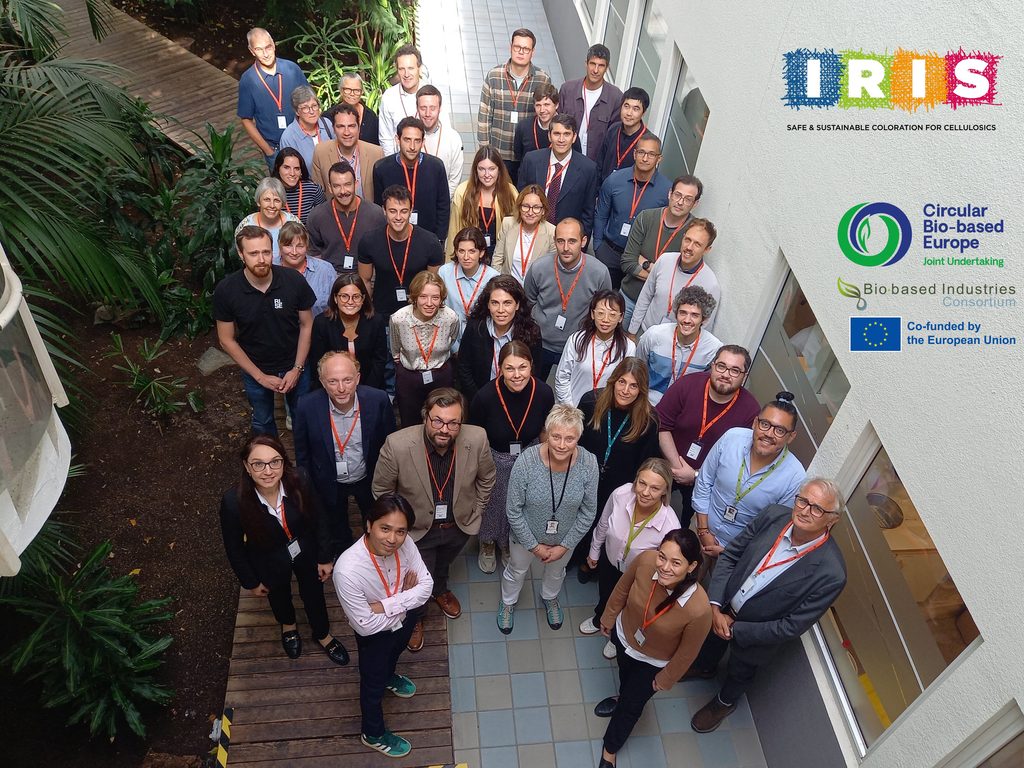
The Innovation Action IRIS – A Prism for Safe and Sustainable Colouration of Cellulosics started on 01 September in Goteborg (SE) and will last until August 2030, funded through the CBE JU (Circular Bio-Based Europe Joint Undertaking; GA 101292536).
The textile industry is heavily reliant on fossil-derived synthetic dyes, with bio-based colourants accounting only for a marginal portion of the market. Barriers for market uptake include aspects of quality, scalability, cost-effectiveness and integration into existing value chains.
IRIS aims at transforming cellulosic textile colouration by replacing hazardous dyeing and printing processes with safer and more sustainable bio-based colourants alternatives. Dyes and pigments will be derived from forestry and agriculture sidestreams and designed to enable circularity and recyclability of the final textile products.
The project will develop a portfolio of solutions for textile wet processing, compatible with existing lines, and with optimized production cost.
IRIS demonstrators will include: bio-based colourants using bio-indigo from fermentation and microbial dyes from CO2; dyes encapsulation to stabilise heat/light-sensitive bio-pigments, reductant-free enzymatic denim dyeing processes, dope-dyeing with bio-based colourants replacing chemically intensive wet dyeing, and PVC-free bio-based screen-printing with on-demand de-printing.
All IRIS solutions will be drop-in or light-retrofit and will be validated against relevant standards and OEKO-TEX® requirements.
IRIS will substitute substances of concern, such as aniline based indigo precursors, strong reductants, reactive azo dyes, and PVC plastisols, by integrating a Safe and Sustainable by Design (SSbD) approach throughout the innovation process.
IRIS expected outcomes include substantial reductions in water, energy and Global Warming Potential (GWP) per kilogram of coloured fabric, elimination or substitution of hazardous inputs, cleaner effluents, and up to 80% recyclability for selected flows.
«A unique strength of IRIS is its multidisciplinary consortium of 18 partners and the Advisory Board», says the Coordinator Anna-Karin Hellström, from RISE – Research Institutes of Sweden, «including academia, research organizations, SMEs, chemical producer, textile manufacturers, retailers and brands. Together, the partners cover the whole textile value chain, ensuring that the developed solutions are technically feasible and ready for industrial uptake».
IRIS contributes to the EU Chemicals Strategy for Sustainability, Zero Pollution, and the Strategy for Sustainable and Circular Textiles by proving market-ready bio-based cellulosic textile colouration that improves worker and consumer safety while unlocking circular, low-carbon growth solutions.
The project is supported by the Circular Bio-based Europe Joint Undertaking and its members. Funded by the European Union. Views and opinions expressed are however those of the author(s) only and do not necessarily reflect those of the European Union or CBE JU. Neither the European Union nor the CBE JU can be held responsible for them.